Blog · · Shipment preparation
Hidden dangerous goods: when an ordinary-looking shipment is not
A box of spare parts, camping gear or frozen food can contain dangerous goods. Here are examples from the IATA list of hidden dangerous goods and how to spot them before acceptance.
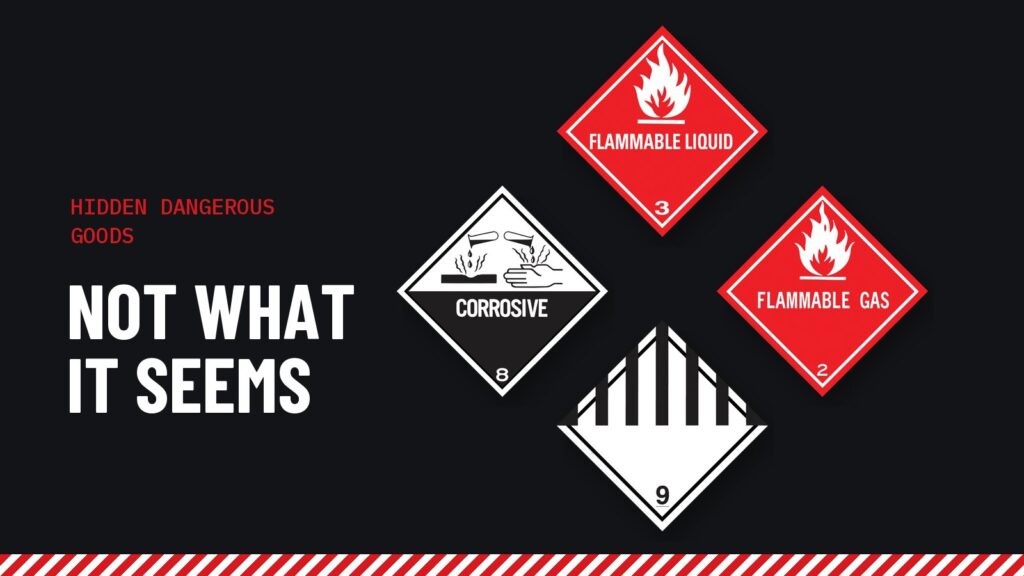
Dangerous goods do not always look dangerous. An item invoiced as “spare parts” or “camping equipment” may contain batteries, flammable liquids or compressed gas. The IATA Dangerous Goods Regulations (DGR) call these hidden dangerous goods. Section 2.2 gives general descriptions of items that may contain them.
Examples from the list
- Aircraft parts: may contain explosives, oxygen generators, paints, adhesives, batteries or fuel.
- Automobile parts: may include engines, carburetors, fuel lines or airbags. Airbag inflators can be classified as UN 0503 or UN 3268.
- Battery-powered equipment: may contain wet or lithium batteries.
- Camping equipment: may contain batteries and flammable gases, liquids or solids.
- Electrical equipment: may contain magnetized material, mercury or batteries.
- Sporting goods: may contain compressed gases, lithium batteries, propane torches or aerosols.
- Frozen foods and vaccines: may be packed in dry ice (UN 1845).
The list also covers breathing apparatus, dental apparatus, instruments that may contain mercury, medical equipment, pharmaceuticals and photographic equipment. It only gives examples. An item that is not on the list may still contain dangerous goods.
How to spot them
If the description is a general term such as “spare parts” or “equipment”, ask what is inside. Ask the supplier for the Safety Data Sheet (SDS) and check Section 14, Transport information. For battery-powered equipment, find out the battery type and its watt-hour rating or lithium content.
Remove or cover any marks and labels left over from earlier shipments that do not apply to the contents. Irrelevant marks and labels are one of the points checked at acceptance.
Why it matters
Undeclared dangerous goods are not checked at acceptance and are not loaded with the precautions they need. Correct classification and declaration protect the flight and keep the shipment from being held at acceptance.


