
Blog · · Dry ice
Dry ice shipments: marking and documentation
Dry ice (UN 1845) is a Class 9 dangerous good in air transport. Based on IATA Packing Instruction 954, we cover the packaging, the package marks and when no Shipper's Declaration is needed.
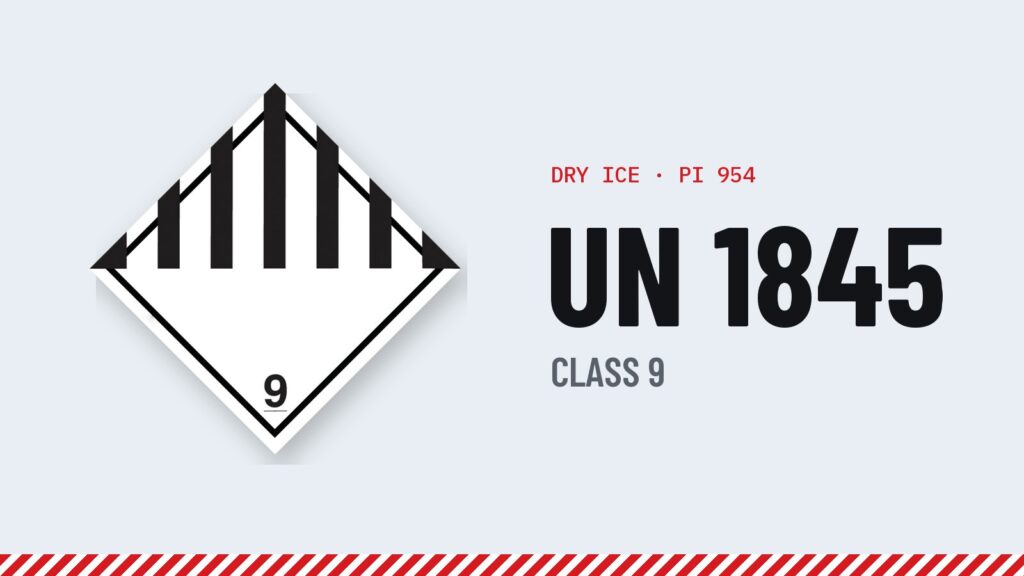
Dry ice is solid carbon dioxide, used to keep pharmaceuticals, samples and food cold. In air transport it is shipped as UN 1845, a Class 9 dangerous good, under IATA Packing Instruction 954 (PI 954). Dry ice does not melt; it turns directly into gas. In a closed container that gas builds up pressure, and in an enclosed space it can displace the oxygen in the air.
The packaging must let the gas escape
PI 954 requires packaging that permits the release of carbon dioxide gas. In a package sealed airtight, pressure builds up and the package can be damaged.
Marks and labels on the package
- “UN 1845”
- The Proper Shipping Name: “Carbon dioxide, solid” or “Dry ice”
- The net weight of dry ice in the package, in kilograms
- The full name and address of the shipper and the consignee
- The Class 9 hazard label
Is a Shipper’s Declaration needed?
A Shipper’s Declaration is needed only when the dry ice is used to cool dangerous goods that themselves require one. Otherwise, the “Nature and Quantity of Goods” box of the air waybill shows UN 1845, the Proper Shipping Name, the number of packages and the net quantity of dry ice in each package. When the dry ice cools dangerous goods that require a declaration, the dry ice is entered on that declaration as well.
Agree on it with the airline in advance
PI 954 requires the shipper to make arrangements with the operator for each shipment, so that the necessary ventilation precautions can be taken on board. A single package may contain no more than 200 kg of dry ice. Airlines can also apply their own operator variations, so give the total quantity of dry ice when you book.


