Useful info · DG Guide
Before you ship dangerous goods
A short reference for agents and shippers. For information only; the binding rules are the IATA DGR, ICAO Technical Instructions, IMDG Code and ADR in force.
Free resource
The pre-shipment checklist
Before you hand your cargo to a carrier, make sure these five points are covered.
- ClassificationHas the substance been identified by its Proper Shipping Name (PSN) and UN number according to the latest SDS?
- PackagingDoes the packaging meet the packing group (I, II or III) requirements? Is the UN specification mark legible and intact?
- Marking and labelingAre primary and subsidiary hazard labels applied at 45° (diamond shape)? Are orientation arrows present for liquids?
- DocumentationIs the Shipper's Declaration signed by a trained person? Does it match the air waybill exactly?
- Compatibility (segregation)If several classes are shipped, has the segregation table been checked for goods that must not be loaded together?
Hazard classes
Nine classes and examples
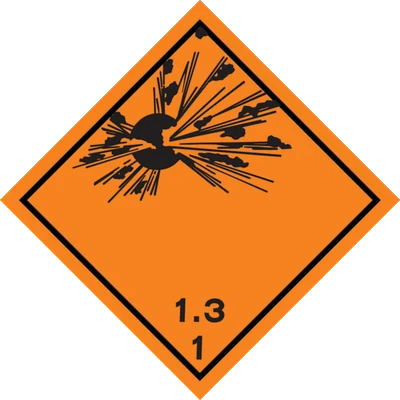
Class 1 · Explosives
1.1 – 1.6
Fireworks, cartridges, airbag inflators, flares. Most are forbidden on passenger aircraft; many need special approval.
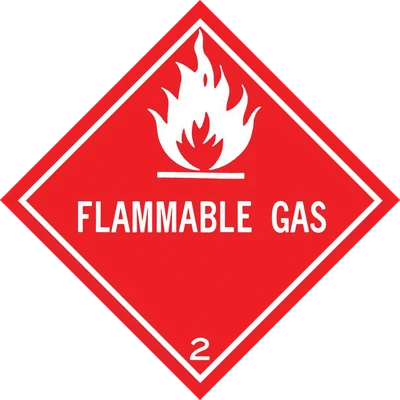
Class 2 · Gases
2.1 flammable · 2.2 non-flammable, non-toxic · 2.3 toxic
Aerosols, gas cylinders, fire extinguishers, lighter refills.

Class 3 · Flammable liquids
Packing group I, II, III
Paint, thinner, perfume, alcohol-based products, fuel, adhesives.

Class 4 · Flammable solids
4.1 flammable solid · 4.2 spontaneously combustible · 4.3 dangerous when wet
Matches, metal powders, sodium, certain chemical solids.
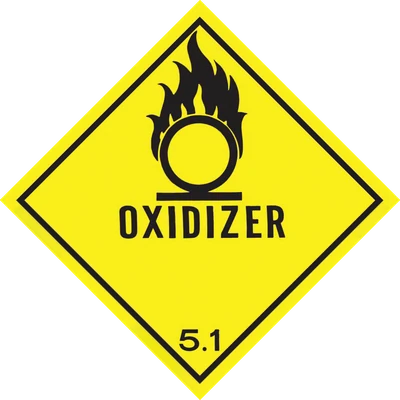
Class 5 · Oxidizers and organic peroxides
5.1 oxidizer · 5.2 organic peroxide
Hydrogen peroxide solutions, some fertilisers, hardeners.
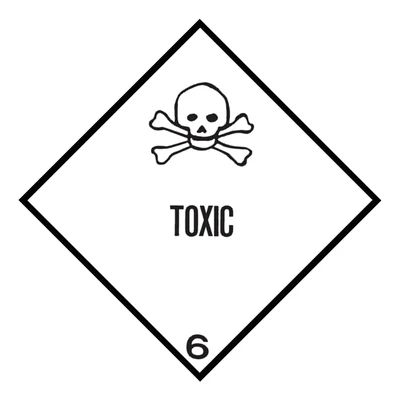
Class 6 · Toxic and infectious substances
6.1 toxic · 6.2 infectious
Pesticides, some laboratory chemicals, biological samples (UN 3373, UN 2814).

Class 7 · Radioactive material
Category I-White, II-Yellow, III-Yellow
Medical isotopes, gauges. Separate authorisation and rules apply.
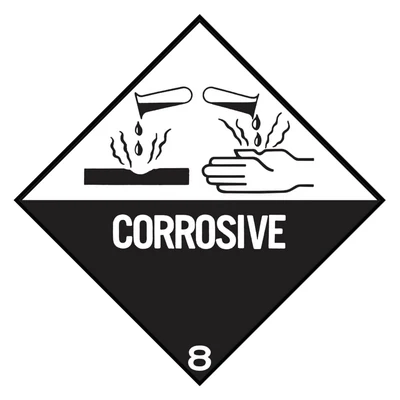
Class 8 · Corrosives
Packing group I, II, III
Acids, alkalis, battery fluid, some cleaning products.

Class 9 · Miscellaneous dangerous goods
Lithium batteries use their own label
Lithium batteries (UN 3480, 3481, 3090, 3091), dry ice (UN 1845), vehicles, magnetised material.
Packing groups
Degree of danger
Except for Classes 1, 2 and 7, substances are assigned to one of three groups by degree of danger. The group sets the packaging strength and permitted quantity.
| Group | Degree of danger | Letter in the UN mark |
|---|---|---|
| PG I | High | X (suitable for I, II and III) |
| PG II | Medium | Y (suitable for II and III) |
| PG III | Low | Z (III only) |
Hidden dangerous goods
Innocent-looking goods
Undeclared dangerous goods are the most common acceptance failure.
- Perfume, cologne, nail polish and aerosol cosmetics
- Phones, laptops, power tools and their lithium batteries
- Auto parts: airbags, batteries, fuel system parts
- Paint, varnish, adhesives and sealants
- Laboratory and diagnostic samples
- Camping gear: gas cartridges, lighters, stoves
- Dry ice in cold-chain shipments
For a quote
What to send us
- Current SDS, including Section 14
- Number of packages and net quantity per inner package
- Origin, destination and transport mode
- Planned shipping date
- For lithium batteries: Wh rating or lithium content and the UN 38.3 test summary
Don't put your shipment at risk. Get in touch with us.
You choose the destination, we take care of the rest.
Free subscription
Subscribe to see the useful info
The DG guide, airline cargo contacts and the volume calculator are open to subscribers. To get regulatory updates as well, tick the box in the form.